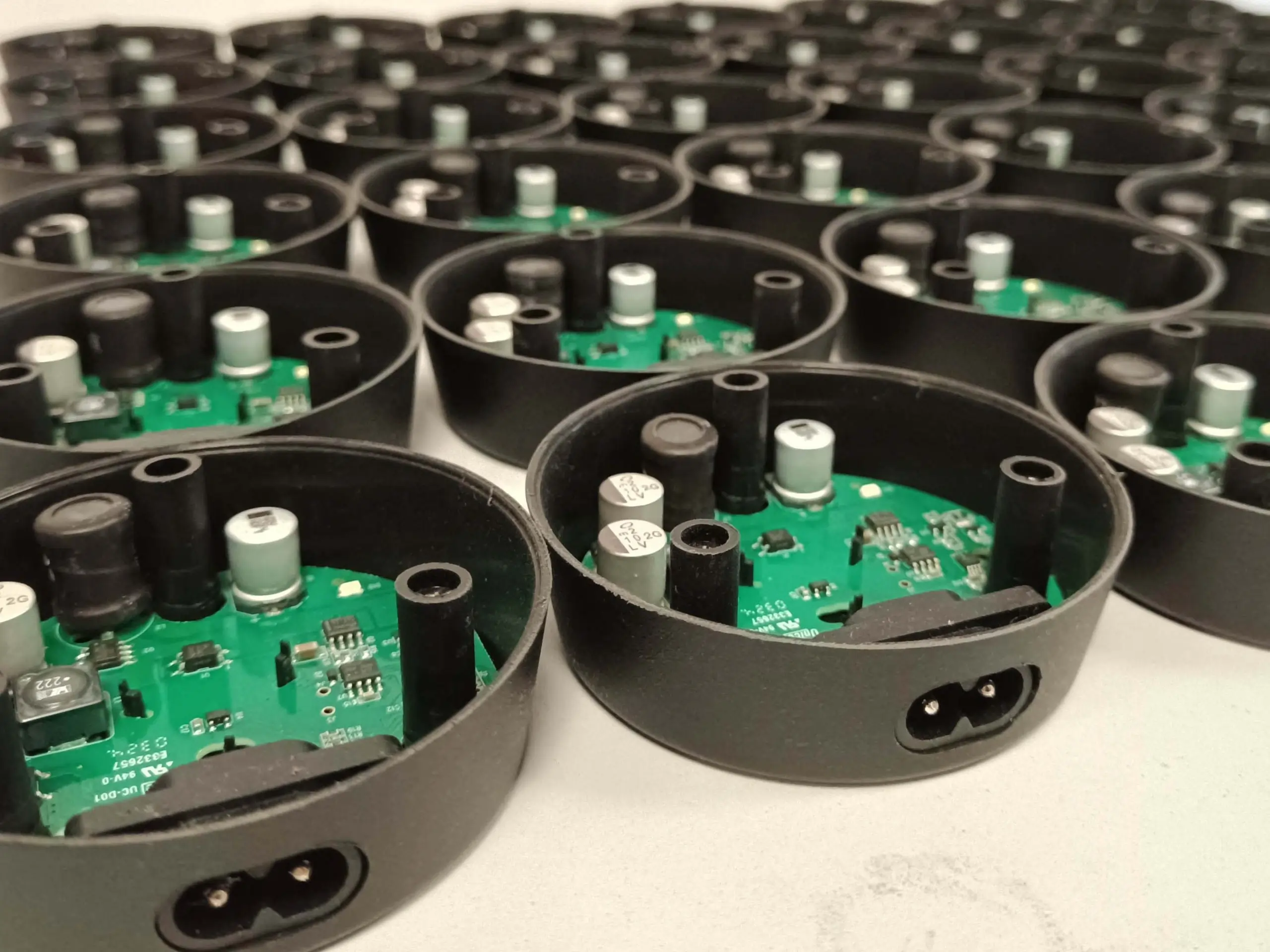
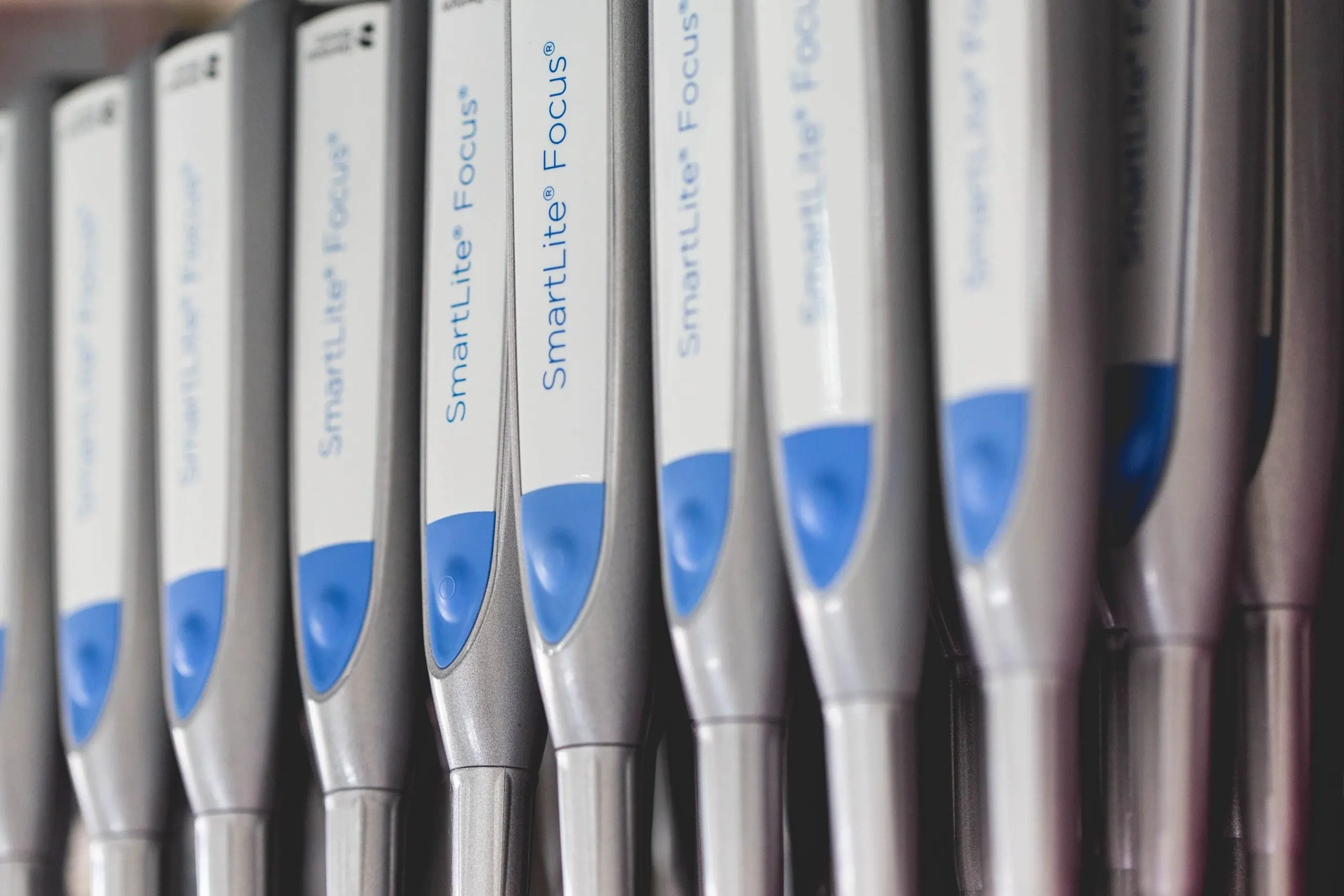

Design for manufacturing (DFM) is the practice of designing products so they can be manufactured efficiently, consistently, and at target cost. In medical device development, DFM failures are expensive: a part that cannot be molded as designed, an assembly sequence that is impractical at scale, or a tolerance stack-up that works in a prototype but fails in production.
The best time to apply DFM principles is during design, not after. Here is what that looks like in practice.
Injection Molding DFM
Most medical device housings are injection-molded thermoplastics. Common DFM issues include:
- Uniform wall thickness: Varying wall thickness causes sink marks, warpage, and inconsistent cooling. Design walls at consistent thickness throughout the part.
- Draft angles: Parts need draft angles (typically 1-3 degrees) to release from the mold. Vertical walls without draft will stick in the mold or require costly side actions.
- Undercuts: Features that prevent straight mold separation require side cores or collapsing cores, adding tooling cost and complexity.
- Gate location: Where plastic enters the mold affects appearance, weld lines, and part strength. Gate placement should be considered during design, not left to the mold maker.
- Tolerances: Injection molding has inherent dimensional variation. Critical dimensions need to be identified early so the mold can be built to tighter specifications where it matters.
Electronics and PCB DFM
PCB designs that work in prototype may cause problems in production:
- Component placement: Parts too close together may cause solder bridging during wave or reflow soldering. Component orientation should follow pick-and-place machine capabilities.
- Test points: Production boards need accessible test points for in-circuit testing (ICT) and functional testing. Adding them after layout is finalized often requires a board revision.
- Panelization: Production PCBs are manufactured in panels. Board outline and breakaway tab placement affect panelization efficiency and unit cost.
- Component availability: Specifying rare or single-source components creates supply chain risk. DFM review should flag components with limited availability or long lead times.
Assembly Process DFM
A device that is easy to assemble in the engineering lab may be difficult to assemble repeatedly on a production line:
- Minimize the number of parts and fasteners
- Design parts for one-way assembly (poka-yoke) so they cannot be installed backward or in the wrong orientation
- Use snap fits or press fits instead of screws where possible
- Ensure adequate clearance for assembly tools
- Design cable routing and connector placement for repeatable assembly
Production assembly differs from lab assembly in one critical way: it must be done consistently by different operators, hundreds or thousands of times. Assembly processes that require skill or judgment at each step are slow and error-prone at scale.
The Integration Advantage
DFM problems typically arise when design and manufacturing are handled by different teams or different companies. The designer does not know the manufacturing constraints. The manufacturer discovers problems after tooling is already in progress.
When the same team handles both design and manufacturing, DFM is built into every decision. The engineer designing a housing already knows the injection molding constraints. The PCB designer already knows the assembly sequence. Problems are caught during design reviews, not during production startup.
This is not a theoretical advantage. It is the difference between one tooling iteration and three. Between a production line that runs smoothly from day one and one that requires weeks of debugging.
Planning a device for production? Our engineering and manufacturing capabilities are integrated from day one. Contact us to discuss your project.