
Dental curing light specifications are dominated by a single number: watts. Higher wattage is marketed as better performance. But in curing applications, the relationship between electrical power input and clinical effectiveness is far more complex than that single number suggests.
What actually determines curing performance is the wavelength of light reaching the composite, the beam’s spatial distribution across the treatment site, and the power density at the material surface. These are optical engineering problems, not power supply problems.
Why Wavelength Matters
Most dental composites use camphorquinone (CQ) as their photoinitiator, which absorbs light most efficiently in a narrow band around 468nm (blue light). Some newer composites use alternative photoinitiators like TPO (trimethylbenzoyl-diphenylphosphine oxide) that absorb in the 380-420nm (violet) range.
A curing light’s LED wavelength must match the photoinitiator in the composite being cured. An LED that peaks at 450nm will waste energy on light that CQ does not absorb efficiently. An LED optimized for CQ will not activate TPO-based composites effectively.
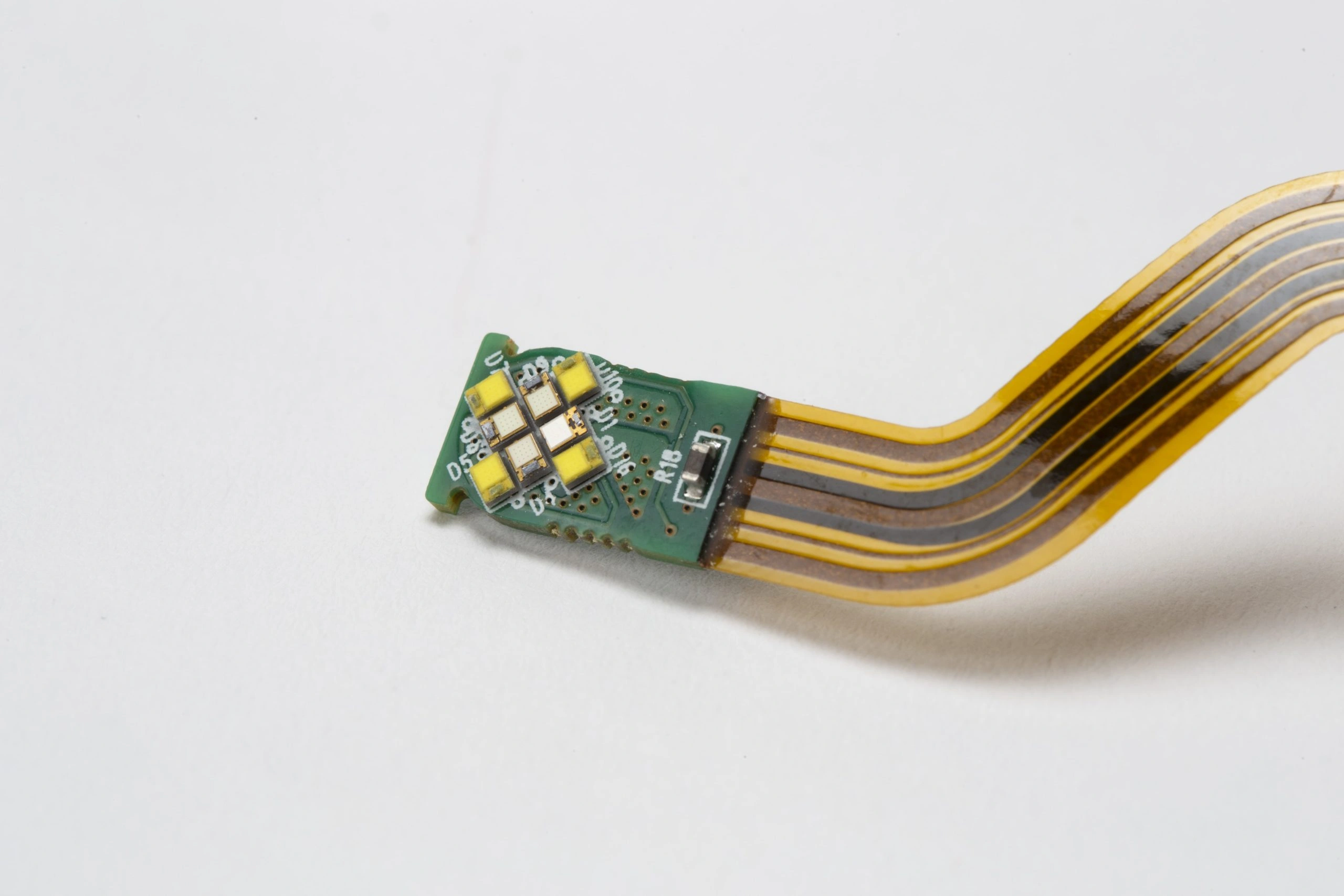
This is why multi-wavelength curing lights exist – they combine LEDs at different peak wavelengths to address both CQ and alternative photoinitiator systems. But adding wavelengths introduces optical engineering challenges: each LED type has different beam characteristics, thermal behavior, and optimal drive current.
The engineering challenge is not selecting an LED. It is designing an optical system that delivers the right wavelengths, at the right intensity, at the right distribution, to the right location.
Beam Control: Where the Engineering Matters
Raw LED output is divergent and non-uniform. Without optical engineering, light spreads across a wide angle, with intensity concentrated at the center and falling off at the edges. For dental curing, you need the opposite: controlled, relatively uniform energy distribution across the entire treatment area.
Optical design elements that affect beam performance:
- Reflector geometry: Custom reflector shapes – including compound parabolic concentrators (CPCs) – collect divergent LED output and redirect it into a controlled beam. CPC design is well-suited for area-source LEDs because it handles the extended source size that point-source reflector designs cannot.
- Collimation: The degree to which light rays are made parallel. Higher collimation delivers more energy to the target but requires more precise optical design.
- Beam uniformity: Even if total power output is high, a beam with a bright center and dim edges will cure unevenly. Uniform beam distribution across the light guide tip ensures consistent polymerization.
- Light guide design: The fiber optic tip that delivers light to the tooth affects beam shape, size, and transmission efficiency. Tip design is part of the optical system, not just a delivery mechanism.
The Wattage Misconception
Wattage measures electrical input power to the LED. It does not measure the radiant output (optical power), the amount of light at the correct wavelength, or the power density at the composite surface.
A 2-watt LED with efficient optics can deliver higher power density at the treatment site than a 5-watt LED with poor beam control. What matters clinically is milliwatts per square centimeter (mW/cm2) of spectrally appropriate light at the composite surface.
This is why evaluating curing lights requires looking beyond the spec sheet. Two lights with identical wattage ratings can have dramatically different clinical performance based on their optical design, LED selection, and beam characteristics.
What This Means for Device Development
Developing a high-performance curing light is an optical engineering challenge that requires understanding LED datasheets at a component level, designing reflector geometries matched to specific LED characteristics, modeling and measuring beam performance through the complete optical path, and validating curing performance with actual composites and photoinitiator systems.
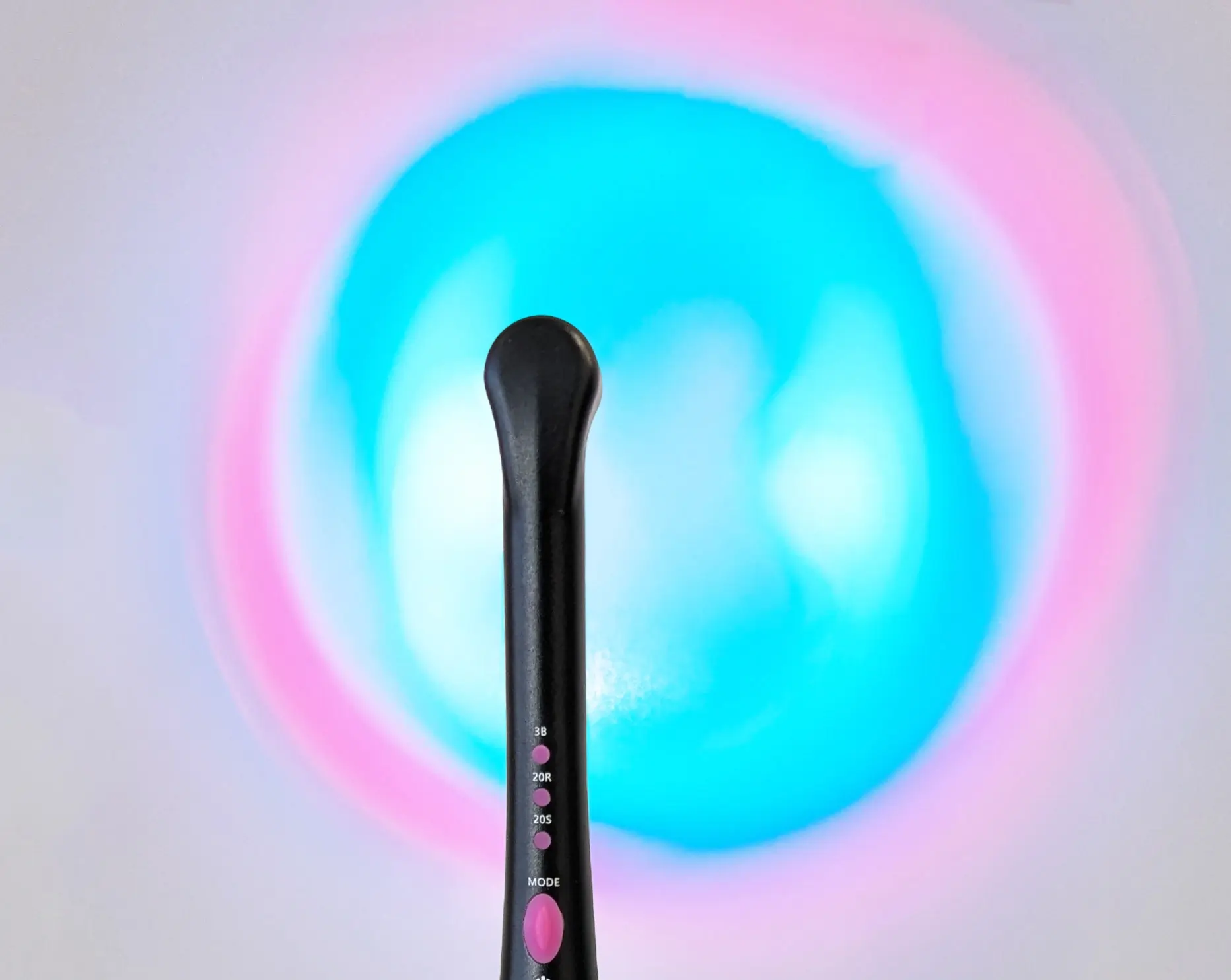
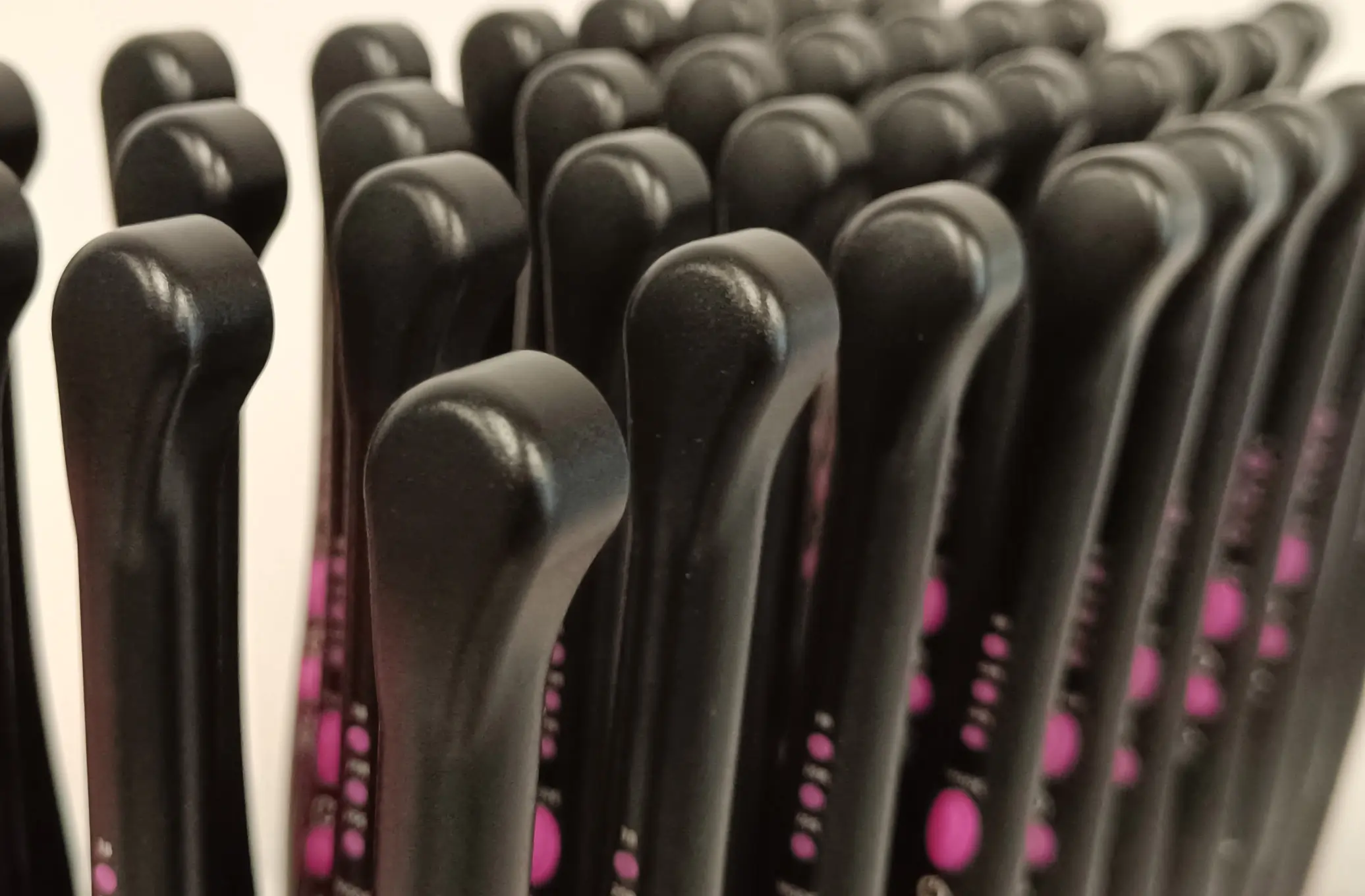
At Kii.am, this is one of our deepest areas of engineering expertise. Our Magicure and Pinkwave curing lights were engineered from these principles – each with custom optical designs optimized for their specific LED configurations and clinical requirements.
Developing a light-based dental device? Contact us to discuss your optical engineering requirements.