
Bringing a medical device from idea to market is a structured process, but it is rarely a straight line. Each stage builds on the one before it, and decisions made early in development have consequences that surface months later – in your regulatory submission, your production costs, or your device’s reliability in clinical use.
Understanding these stages before you begin helps you plan realistically, budget accurately, and avoid the costly rework that comes from skipping steps or treating development as a linear checklist.
Here are the seven stages most medical device projects move through, and what actually happens in each one.
Stage 1: Requirements Definition & Feasibility
Before any design work begins, you need to define what the device must do, who will use it, and what regulatory pathway it will follow. This is not a formality – it is the foundation that every subsequent decision rests on.
A thorough requirements phase covers intended use, target user profile, performance specifications, environmental conditions, safety requirements, and preliminary regulatory classification. It also includes a feasibility assessment: can this device be built within the target cost, timeline, and regulatory framework?
Skipping or rushing this stage is the single most common reason medical device projects go over budget. Requirements that are not defined upfront get discovered later – usually during testing or regulatory review – when changes are expensive.
Stage 2: Concept Design
Concept design translates requirements into preliminary engineering solutions. This typically involves multiple design concepts evaluated against the requirements, preliminary component selection, initial mechanical and electronic architecture, and early design-for-manufacturing considerations.
At Kii.am, concept design is where our integrated approach starts paying off. Because our mechanical, electronic, optical, and manufacturing engineers work together from day one, concept designs are practical from the start – not theoretical exercises that need to be redesigned for production later.
Stage 3: Detailed Design & Engineering
This is where engineering depth matters most. Detailed design includes complete mechanical design and CAD models, circuit schematics and PCB layout, optical system design (for light-based devices), firmware architecture, and industrial design for ergonomics and user interface.
For devices involving LEDs, optics, custom electronics, battery management, motors, pumps, bluetooth, or touchscreens, this stage requires engineers who understand how these subsystems interact – not just how each one works in isolation.
Stage 4: Prototyping & Iteration
Prototyping validates design decisions with physical hardware. The goal is not to build a perfect device on the first try – it is to identify problems early, when changes are cheap.
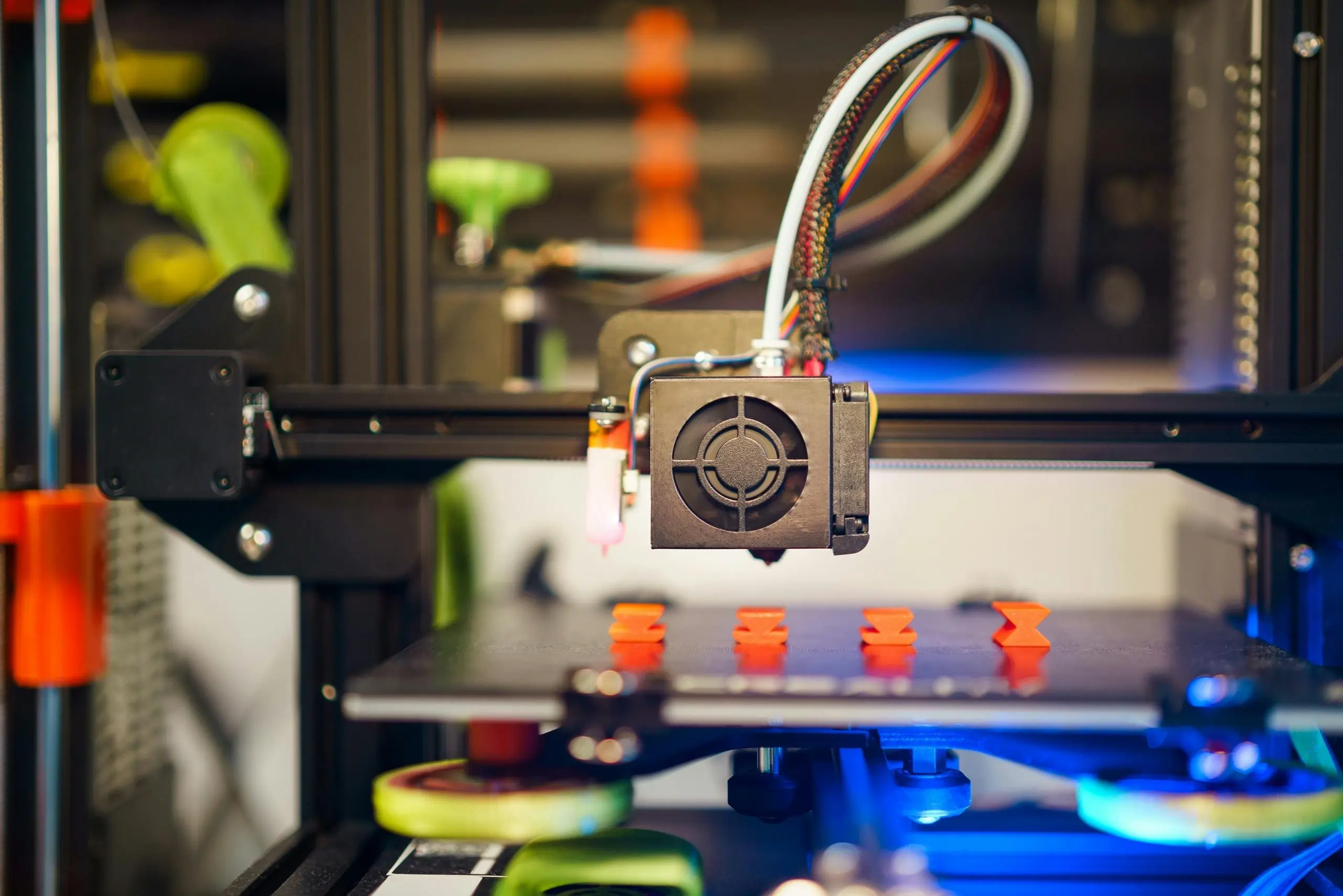
Typical prototyping methods include 3D printing (FDM and SLA) for mechanical validation, CNC machining for functional prototypes, PCB prototyping for electronics verification, and rapid injection molding for near-production parts.
Most projects go through two to four prototype iterations before the design is ready for verification testing. Having prototyping capabilities in the same facility as the engineering team accelerates this cycle significantly.
Stage 5: Verification & Validation Testing
Verification confirms the device meets its design specifications. Validation confirms it meets user needs in the intended environment. Both are required for regulatory submissions.
Testing protocols cover performance testing against specifications, safety testing (electrical, mechanical, thermal), biocompatibility testing where applicable, environmental testing (temperature, humidity, drop), and usability testing with representative users.
Test results feed directly into your regulatory submission. If your design controls and documentation have been maintained throughout development, this stage is a confirmation exercise. If they have not, it is where projects stall.
Stage 6: Regulatory Preparation
Regulatory preparation is not a separate phase that happens at the end – it is the compilation of documentation that should have been maintained throughout development. This includes the design history file (DHF), risk management file per ISO 14971, test reports and clinical evidence, and technical documentation for FDA 510(k) or CE marking.
At Kii.am, we maintain design controls from project initiation, so the documentation is organized and complete when your regulatory consultant or RA team needs it for submission.
Stage 7: Production Tooling & Serial Manufacturing
The transition from prototype to production is where many projects hit unexpected problems. Designs that worked as prototypes may not translate cleanly to injection-molded parts. Assembly sequences that were manageable for ten units become bottlenecks at scale.
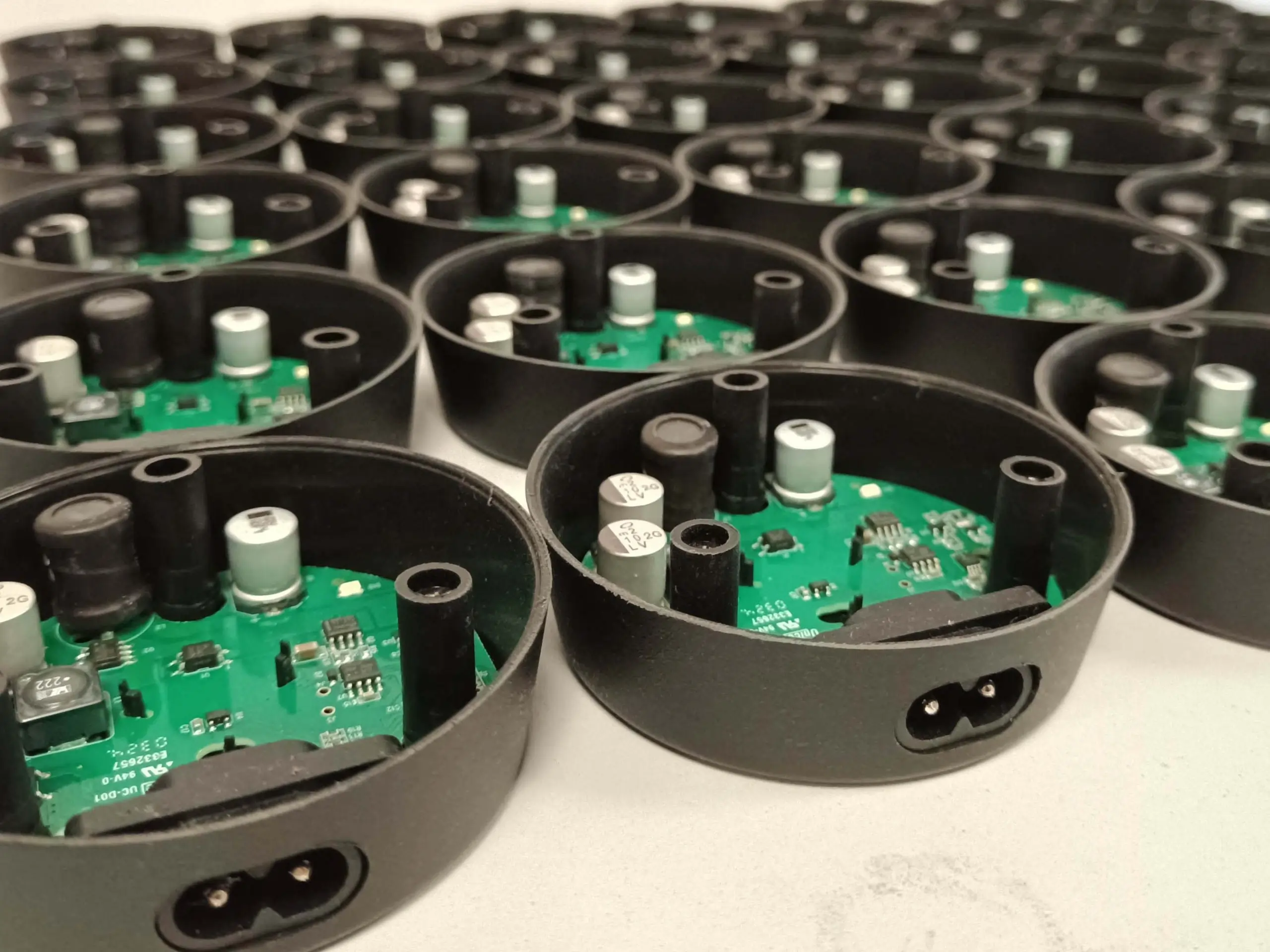
Production setup includes injection mold tooling design and sourcing, assembly line setup and process validation, quality assurance procedures and acceptance criteria, supply chain establishment for components and materials, and production documentation and work instructions.
When the team that designed the device also manages its production, these translation problems are minimized. Design decisions already account for manufacturing realities because the same engineers are responsible for both.
The Bottom Line
Medical device development is a structured process, but success depends on how well the stages connect. Requirements inform design. Design decisions affect testing. Testing results support regulatory submissions. And manufacturing must faithfully reproduce what was engineered.
The most efficient path through these stages is an integrated one: one team, one facility, from concept to serial production.
Developing a medical device? Contact Kii.am to discuss your project requirements and timeline.